Hemorrhoids are a common condition, but not all cases are the same. Some people experience mild, occasional symptoms, while others deal with more persistent discomfort that may require medical treatment. One way healthcare providers evaluate hemorrhoids is by looking at their stage or grade, which helps guide treatment decisions.
At California Hemorrhoid Institute, we believe that understanding the progression of hemorrhoids can help patients feel more informed and confident when exploring care options. In this guide, we’ll walk through the different stages of hemorrhoids, what symptoms may look like at each level, and when it may be time to consider treatment.
Understanding Hemorrhoid Staging
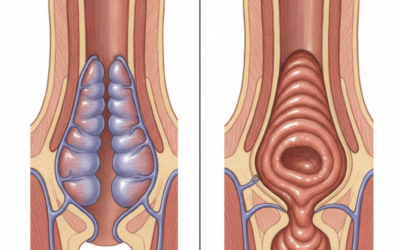
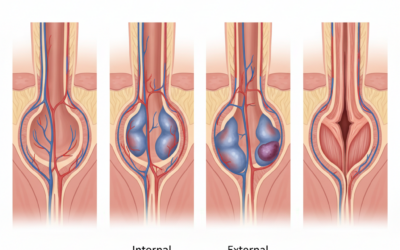
Hemorrhoids are typically categorized into four stages (Grades I–IV). These stages are primarily used to describe internal hemorrhoids, which develop inside the rectum.
The staging system is based on how much the hemorrhoids have enlarged and whether they extend outside the rectum (a process called prolapse). As the stage progresses, symptoms may become more noticeable or persistent.
Grade I Hemorrhoids (Early Stage)
Grade I hemorrhoids are considered the mildest form. At this stage, the hemorrhoids remain inside the rectum and do not protrude outside the body.
Common characteristics:
- No visible bulging outside the anus
- Mild swelling of internal veins
- Occasional rectal bleeding
- Minimal or no discomfort
Many people with Grade I hemorrhoids may not even realize they have them, especially if symptoms are infrequent. Bleeding during bowel movements is often the most noticeable sign.
Management at this stage:
Early-stage hemorrhoids are often managed with conservative approaches, such as:
- Increasing fiber intake
- Staying well hydrated
- Avoiding straining during bowel movements
These steps may help reduce pressure on the veins and prevent progression.
Grade II Hemorrhoids
Grade II hemorrhoids are slightly more advanced. At this stage, the hemorrhoids may prolapse (protrude) during bowel movements, but they return inside the rectum on their own.
Common characteristics:
- Intermittent prolapse during bowel movements
- Bleeding that may be more noticeable
- Mild discomfort or irritation
- A feeling of fullness or pressure
While symptoms may still come and go, patients often begin to notice a pattern or increased frequency.
Management at this stage:
In addition to lifestyle changes, some patients may explore:
- Office-based procedures such as rubber band ligation
- Medical evaluation for persistent symptoms
For patients seeking alternatives to traditional procedures, minimally invasive treatments may also be discussed depending on symptom severity.
Grade III Hemorrhoids
Grade III hemorrhoids are more advanced and involve prolapse that does not resolve on its own. However, the hemorrhoids can still be gently pushed back into place.
Common characteristics:
- Hemorrhoids that protrude and require manual repositioning
- Increased discomfort or irritation
- Ongoing bleeding or swelling
- Greater impact on daily activities
At this stage, symptoms are typically more noticeable and may interfere with sitting, exercise, or other routine activities.
Treatment considerations:
Grade III hemorrhoids often require more than conservative care. Treatment options may include:
- Office-based procedures
- Surgical approaches in some cases
- Minimally invasive options such as Hemorrhoid Artery Embolization (HAE)
HAE is designed to reduce blood flow to the hemorrhoids in a targeted way, which may help them shrink and relieve symptoms without traditional surgery.
Grade IV Hemorrhoids (Advanced Stage)
Grade IV hemorrhoids are the most advanced stage. At this point, the hemorrhoids are prolapsed and cannot be pushed back inside.
Common characteristics:
- Persistent external bulging
- Ongoing discomfort or pressure
- Increased irritation
- Possible complications such as thrombosis (clotting within the hemorrhoid)
Symptoms at this stage can be more consistent and may significantly affect daily comfort.
Treatment considerations:
Grade IV hemorrhoids often require interventional treatment. While traditional surgery has been a common approach, some patients may be candidates for minimally invasive alternatives, depending on their individual condition.
A detailed evaluation is important to determine the most appropriate treatment plan.
Do Hemorrhoids Always Progress?
Not necessarily. Hemorrhoids do not always move from one stage to the next. With proper care, early-stage hemorrhoids may remain stable or improve over time.
However, without management, ongoing pressure on the veins can contribute to progression. This is why early awareness and lifestyle adjustments can play an important role in symptom control.
When Should You Seek Medical Care?
It may be helpful to consult a specialist if you experience:
- Persistent or recurring bleeding
- Ongoing discomfort or irritation
- Hemorrhoids that protrude or worsen over time
- Symptoms that do not improve with home care
Even if symptoms seem mild, a professional evaluation can help confirm the diagnosis and rule out other conditions that may cause similar symptoms.
Minimally Invasive Treatment Options
At California Hemorrhoid Institute, we focus on minimally invasive, image-guided treatments that address hemorrhoids at their source.
Hemorrhoid Artery Embolization (HAE)
HAE is a specialized procedure that targets the arteries supplying blood to the hemorrhoids. By reducing blood flow in a precise and controlled way, the hemorrhoids may gradually shrink, and symptoms may improve.
This approach is:
- Performed without large incisions
- Image-guided for accuracy
- Typically completed in an outpatient setting
- Designed to preserve surrounding tissue
For patients with moderate to more advanced hemorrhoids, HAE may offer an alternative to more invasive surgical procedures.
Understanding Your Options
The stage of hemorrhoids is just one factor in determining the best treatment approach. Every patient’s experience is different, and treatment recommendations are based on a combination of symptoms, severity, and overall health.
At California Hemorrhoid Institute, we take time to evaluate each case carefully and discuss available options in a clear and supportive way.
Find Relief with Specialized Care
If you are experiencing symptoms of hemorrhoids, whether mild or more advanced, you do not have to manage them alone. Understanding the stage of your condition is an important first step toward finding the right treatment.
Our team in Irvine, CA, provides expert evaluation and minimally invasive hemorrhoid treatment for patients throughout Orange County. Through personalized care and advanced techniques such as Hemorrhoid Artery Embolization, we aim to help patients move forward with greater comfort and confidence.
If you are ready to learn more about your options, we encourage you to schedule a consultation and take the next step toward relief.