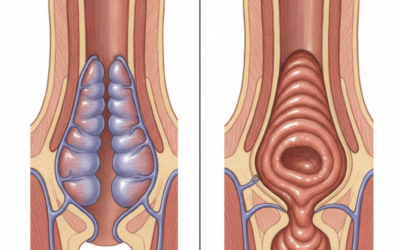
Hemorrhoids are one of the most common conditions affecting the lower digestive tract, yet many people don’t realize there are different types of hemorrhoids. Understanding whether symptoms are related to internal hemorrhoids or external hemorrhoids can help you better recognize your condition and know when it may be time to seek medical care.
While both types involve swollen veins in the rectal area, they differ in their location, symptoms, and the way they are treated. At California Hemorrhoid Institute, we help patients understand these differences and explore treatment options, including Hemorrhoid Artery Embolization (HAE) for appropriate candidates.
What Are Hemorrhoids?
Hemorrhoids are enlarged or swollen veins in the lower rectum and anus. Everyone has hemorrhoidal tissue that plays a role in normal bowel function, but increased pressure can cause these veins to become enlarged and symptomatic.
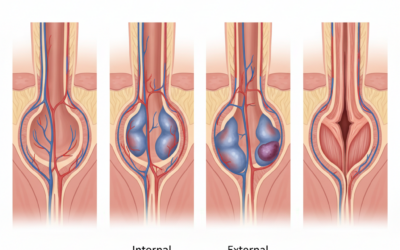
Hemorrhoids are generally classified as either:
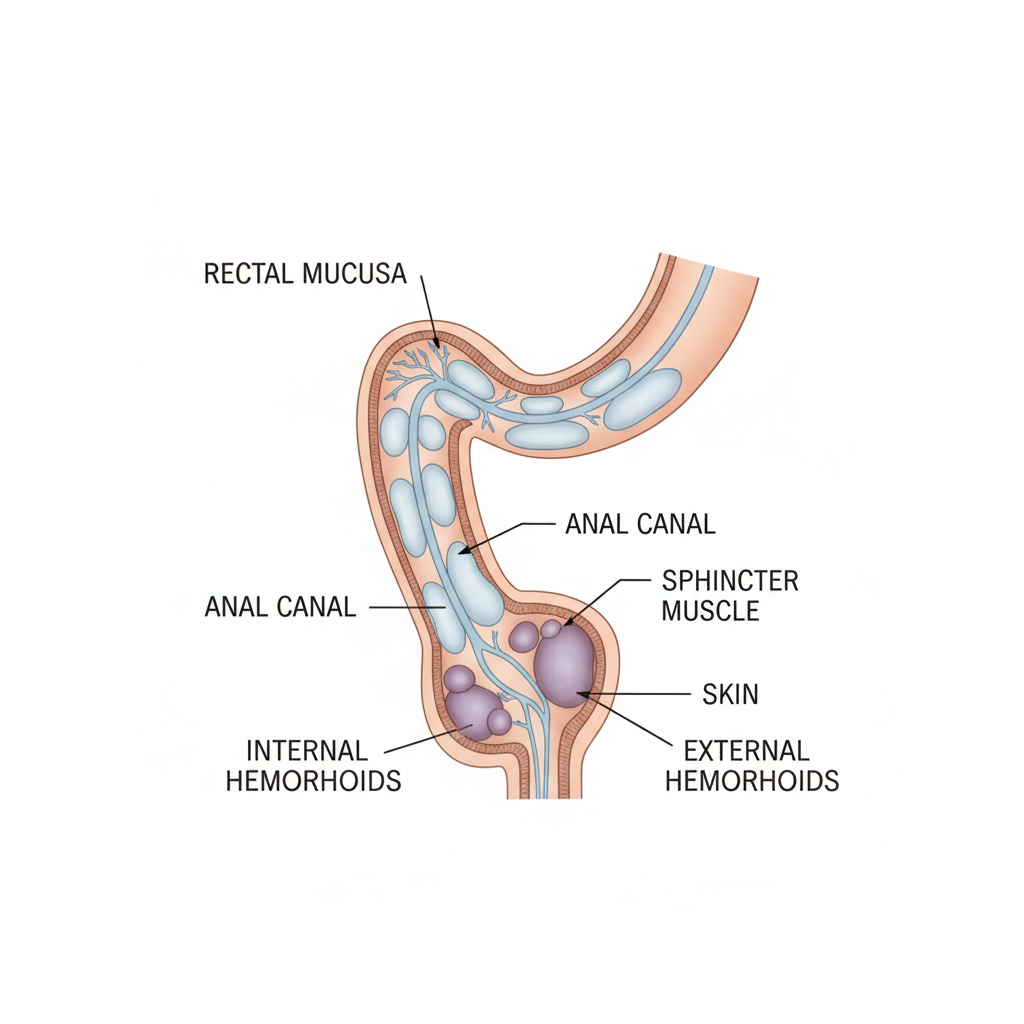
- Internal hemorrhoids, which develop inside the rectum
- External hemorrhoids, which develop beneath the skin around the anus
Although they share the same underlying cause, increased pressure in the rectal veins, their symptoms and treatment options can differ.
What Are Internal Hemorrhoids?
Internal hemorrhoids form inside the rectum, above an area with relatively few pain-sensitive nerves. Because of their location, they often cause little or no pain, especially in the early stages.
Many people don’t realize they have internal hemorrhoids until they notice bleeding during a bowel movement or are diagnosed during a medical examination.
Common Symptoms of Internal Hemorrhoids
Internal hemorrhoids may cause:
- Bright red rectal bleeding during or after bowel movements
- A feeling of fullness or pressure
- Mucus discharge in some cases
- Tissue that protrudes during bowel movements (prolapse)
Internal hemorrhoids are commonly classified into four grades based on whether they prolapse outside the rectum and whether they return on their own or require manual repositioning.
Not every internal hemorrhoid causes symptoms, and many mild cases can be managed with lifestyle modifications.
What Are External Hemorrhoids?
External hemorrhoids develop under the skin surrounding the anus. Because this area contains many pain-sensitive nerves, external hemorrhoids are more likely to cause noticeable discomfort.
Symptoms often become more apparent during prolonged sitting, bowel movements, or periods of irritation.
Common Symptoms of External Hemorrhoids
External hemorrhoids may cause:
- Pain or tenderness around the anus
- Swelling
- Itching or irritation
- A small lump near the anal opening
- Discomfort while sitting
If a blood clot develops inside an external hemorrhoid, a condition known as a thrombosed hemorrhoid, pain can become more significant and may require prompt medical evaluation.
Internal vs. External Hemorrhoids: Key Differences
Although both conditions involve swollen veins, several characteristics help distinguish them.
Location
The primary difference is where the hemorrhoids develop.
- Internal hemorrhoids occur inside the rectum.
- External hemorrhoids occur beneath the skin around the anus.
Their location influences the type of symptoms patients experience.
Pain
Pain is often one of the easiest ways to distinguish the two.
Internal hemorrhoids usually cause little discomfort unless they become prolapsed or irritated.
External hemorrhoids are generally more likely to cause soreness, tenderness, or discomfort because of their location near sensitive nerve endings.
Bleeding
Both types of hemorrhoids can bleed.
Internal hemorrhoids are more commonly associated with painless, bright red bleeding during bowel movements.
External hemorrhoids may bleed if they become irritated or injured, but discomfort is often more prominent than bleeding.
Appearance
Internal hemorrhoids are not usually visible unless they prolapse.
External hemorrhoids may appear as swelling or a lump near the anal opening that can often be seen or felt.
What Causes Internal and External Hemorrhoids?
The underlying causes are generally the same for both types.
Factors that increase pressure on the veins in the lower rectum include:
- Chronic constipation
- Straining during bowel movements
- Prolonged sitting
- Pregnancy
- Heavy lifting
- Obesity
- Aging
- Low-fiber diets
These factors can contribute to the enlargement of the hemorrhoidal veins over time.
Can You Have Both Internal and External Hemorrhoids?
Yes. Some patients develop both internal and external hemorrhoids at the same time.
This is sometimes referred to as mixed hemorrhoidal disease. Symptoms may include both bleeding and discomfort, making it especially important to receive an accurate diagnosis.
A thorough evaluation can help determine which hemorrhoids are responsible for your symptoms and guide treatment recommendations.
How Are Hemorrhoids Diagnosed?
A healthcare provider can usually diagnose hemorrhoids through a discussion of symptoms and a physical examination.
Depending on the type of hemorrhoid suspected, the evaluation may include:
- Review of your medical history
- Discussion of bowel habits
- Visual examination of the anal area
- Gentle examination of the rectum when appropriate
- Additional testing if symptoms suggest another condition
Because rectal bleeding can have causes other than hemorrhoids, persistent or unexplained bleeding should always be evaluated by a medical professional.
Treatment Options for Internal and External Hemorrhoids
Treatment depends on the type of hemorrhoid, the severity of symptoms, and how much they affect your daily life.
Conservative Treatment
Many mild hemorrhoids improve with non-surgical measures, including:
- Increasing dietary fiber
- Drinking more water
- Avoiding excessive straining
- Regular physical activity
- Warm sitz baths to help ease discomfort
- Limiting prolonged sitting, especially on the toilet
These measures may reduce symptoms and help prevent future flare-ups.
Office-Based Procedures
For hemorrhoids that do not improve with conservative care, physicians may recommend office-based treatments such as:
- Rubber band ligation
- Infrared coagulation
- Sclerotherapy
These treatments are commonly used for selected cases of internal hemorrhoids.
Hemorrhoid Artery Embolization
At California Hemorrhoid Institute, we specialize in Hemorrhoid Artery Embolization (HAE), a minimally invasive treatment that addresses hemorrhoids by targeting the arteries supplying them with blood.
Using advanced imaging guidance, an interventional radiologist inserts a small catheter into a blood vessel and precisely identifies the arteries feeding the hemorrhoids. Tiny embolic particles are then used to reduce blood flow to these vessels, allowing the hemorrhoids to gradually shrink over time.
Because HAE is performed through a small catheter rather than large incisions, many patients appreciate its minimally invasive approach and outpatient setting. Not every patient is a candidate, but it may be an effective option for individuals with symptomatic internal hemorrhoids who are seeking an alternative to traditional surgery.
When Should You See a Specialist?
While occasional hemorrhoid symptoms may improve with home care, persistent symptoms deserve medical attention.
Consider scheduling an evaluation if you experience:
- Recurring rectal bleeding
- Ongoing pain or discomfort
- Swelling that does not improve
- Hemorrhoids that repeatedly return
- Symptoms that interfere with work, exercise, or daily activities
Seeking care early may help prevent symptoms from becoming more severe and allows you to learn about the full range of available treatment options.
Learn More About Your Treatment Options
Although internal and external hemorrhoids share some similarities, they can affect patients in different ways. Understanding which type you have is an important step toward finding effective relief.
At California Hemorrhoid Institute, our team provides comprehensive evaluations and personalized treatment recommendations based on your symptoms, overall health, and treatment goals. Whether conservative management is appropriate or you may benefit from Hemorrhoid Artery Embolization, we are committed to helping you make informed decisions about your care.
If you are experiencing persistent hemorrhoid symptoms, contact California Hemorrhoid Institute to schedule a consultation and learn more about advanced, minimally invasive hemorrhoid treatment in Irvine and throughout Orange County.