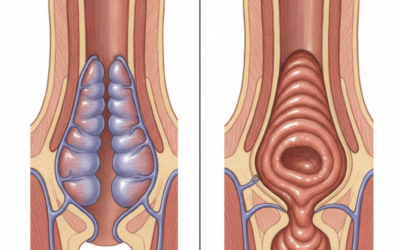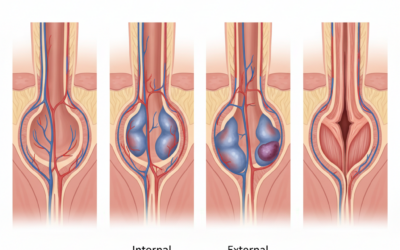
If you’ve been diagnosed with hemorrhoids, you may be surprised by the number of treatment options available. While many mild cases improve with lifestyle changes, persistent symptoms may require a medical procedure. Two options that patients commonly encounter are rubber band ligation (banding) and Hemorrhoid Artery Embolization (HAE).
Although both treatments are designed to relieve hemorrhoid symptoms, they work in very different ways. Understanding the differences can help you have a more informed conversation with your physician about which approach may be appropriate for your condition.
At California Hemorrhoid Institute, we specialize in Hemorrhoid Artery Embolization, a minimally invasive, image-guided procedure that offers an alternative to traditional hemorrhoid treatments for select patients. In this article, we’ll compare HAE and rubber band ligation, explain how each works, and discuss factors that may influence treatment recommendations.
When Is Hemorrhoid Treatment Needed?
Many hemorrhoids respond well to conservative care, especially in their early stages. Increasing dietary fiber, staying hydrated, exercising regularly, and avoiding excessive straining can often help manage mild symptoms.
However, treatment may be recommended if you experience:
- Recurrent rectal bleeding
- Ongoing discomfort or irritation
- Hemorrhoids that repeatedly flare up
- Symptoms that interfere with daily activities
- Limited improvement with home remedies
When symptoms persist, your physician may discuss procedural treatment options based on the type and severity of your hemorrhoids.
What Is Rubber Band Ligation?
Rubber band ligation, commonly called hemorrhoid banding, is one of the most frequently performed office-based treatments for internal hemorrhoids.
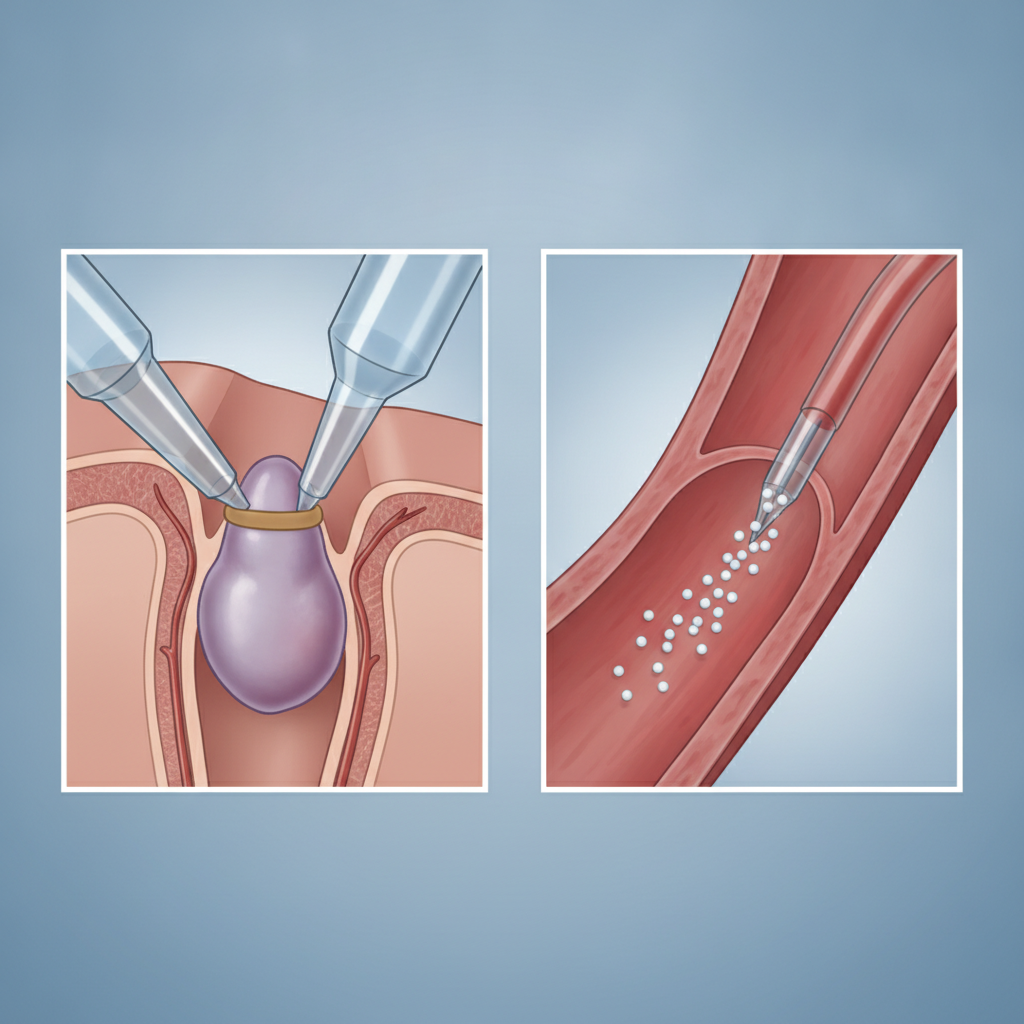
During the procedure, a physician places a small rubber band around the base of an internal hemorrhoid. The band reduces blood flow to the hemorrhoidal tissue, and over time, the treated tissue shrinks and separates from the rectal wall.
The procedure is typically performed in an office setting without general anesthesia and is most commonly used for Grade I, Grade II, and selected Grade III internal hemorrhoids.
Potential Benefits of Rubber Band Ligation
Rubber band ligation has been used successfully for many years and offers several advantages for appropriate patients.
Potential benefits include:
- Office-based treatment
- Short procedure time
- No surgical incisions
- Established treatment for many internal hemorrhoids
- Relatively quick return to normal activities for many patients
As with any medical procedure, treatment recommendations depend on the patient’s individual symptoms and anatomy.
What Is Hemorrhoid Artery Embolization?
Hemorrhoid Artery Embolization (HAE) is a newer, minimally invasive treatment performed by an interventional radiologist. Rather than treating the hemorrhoid directly, HAE addresses the arteries that supply blood to the hemorrhoids.
During the procedure:
- A physician inserts a small catheter through a tiny entry point in a blood vessel.
- Using advanced imaging guidance, the catheter is carefully navigated to the arteries supplying the hemorrhoids.
- Tiny embolic particles are placed to reduce blood flow to the hemorrhoids.
As blood flow decreases, the hemorrhoids may gradually shrink, often leading to improvement in symptoms over time.
Because the treatment is performed from inside the blood vessels, no large incisions are required, and the surrounding tissues are preserved.
Comparing HAE and Rubber Band Ligation
Although both procedures aim to reduce hemorrhoid symptoms, they accomplish this in different ways.
How the Procedures Work
Rubber band ligation works by physically placing a small band around the hemorrhoid to interrupt its blood supply.
Hemorrhoid Artery Embolization works by identifying and treating the arteries that feed the hemorrhoids using image-guided techniques. Rather than placing a band on the hemorrhoid itself, the procedure reduces the blood flow reaching the hemorrhoidal tissue.
Both approaches seek to decrease the size of hemorrhoids, but they target different parts of the problem.
Invasiveness
Both treatments are considered less invasive than traditional hemorrhoid surgery.
Rubber band ligation is performed through the anal canal without surgical incisions.
Hemorrhoid Artery Embolization is performed through a tiny catheter inserted into a blood vessel, avoiding large incisions and allowing physicians to treat the hemorrhoidal blood supply with image guidance.
Recovery
Recovery experiences vary from person to person and depend on factors such as the severity of hemorrhoids, the treatment performed, and overall health.
Many patients return to normal activities relatively quickly after either procedure, although individual recovery timelines differ. Your physician can provide guidance based on your specific situation and the procedure you undergo.
Which Hemorrhoids Can Be Treated?
Rubber band ligation is primarily intended for internal hemorrhoids and is generally not used to treat external hemorrhoids.
Hemorrhoid Artery Embolization has been studied primarily for symptomatic internal hemorrhoids, particularly those associated with rectal bleeding. Whether HAE is appropriate depends on factors such as hemorrhoid grade, symptoms, and overall anatomy.
A consultation with a specialist is the best way to determine whether you may be a candidate for either treatment.
Other Non-Surgical Hemorrhoid Treatments
In addition to HAE and banding, several other non-surgical approaches may be considered depending on the severity of symptoms.
These may include:
- Dietary changes to increase fiber intake
- Hydration improvements
- Stool softeners when appropriate
- Warm sitz baths
- Topical medications
- Infrared coagulation
- Sclerotherapy
Each treatment has different advantages and is selected based on the patient’s condition and treatment goals.
Is Surgery Ever Necessary?
While many hemorrhoids can be managed without surgery, some patients with more advanced disease may benefit from surgical treatment.
Traditional hemorrhoid surgery may be recommended when:
- Hemorrhoids are large or significantly prolapsed
- Symptoms are severe
- Other treatments have not provided adequate relief
- Complications are present
The goal is always to recommend the least invasive treatment that is appropriate for the patient’s condition.
Which Treatment May Be Right for You?
There is no single treatment that is best for everyone.
Your physician will consider several factors when making recommendations, including:
- The type of hemorrhoids
- Their size and severity
- Whether bleeding is the primary symptom
- Your overall health
- Previous hemorrhoid treatments
- Your treatment goals
A personalized evaluation helps determine which option is most likely to provide meaningful symptom relief.
Why Some Patients Consider Hemorrhoid Artery Embolization
Patients interested in minimally invasive treatment often appreciate that Hemorrhoid Artery Embolization focuses on the underlying blood supply contributing to symptomatic hemorrhoids.
Potential advantages of HAE may include:
- Image-guided precision
- No large surgical incisions
- Outpatient treatment
- Preservation of surrounding tissue
- Shorter recovery compared to traditional hemorrhoid surgery for many patients
Not every patient is a candidate for embolization, but for appropriate individuals, it may provide an effective alternative to more invasive approaches.
Choosing the Best Path Forward
Deciding between rubber band ligation, Hemorrhoid Artery Embolization, or another treatment starts with an accurate diagnosis. The type of hemorrhoids you have, the severity of your symptoms, and your overall health all play a role in determining the most appropriate approach.
At California Hemorrhoid Institute, we take the time to evaluate each patient individually and explain every available option in clear, understandable language. Our goal is to help you make an informed decision based on your unique needs, not a one-size-fits-all treatment plan.
If you are experiencing ongoing bleeding, discomfort, or recurrent hemorrhoids, our team in Irvine, CA is here to help. Contact us to schedule a consultation and learn whether Hemorrhoid Artery Embolization or another treatment option may be right for you.