If you’re experiencing pain, bleeding, or discomfort during bowel movements, it can be difficult to know exactly what’s causing your symptoms. Two of the most common conditions affecting the anal area are hemorrhoids and anal fissures. While they share some similar symptoms, they are different conditions that require different approaches to treatment.
At California Hemorrhoid Institute, we believe that understanding the difference between hemorrhoids and anal fissures can help you seek the right care sooner. In this guide, we’ll explain what each condition is, how its symptoms compare, and when it’s time to see a specialist.
What Are Hemorrhoids?
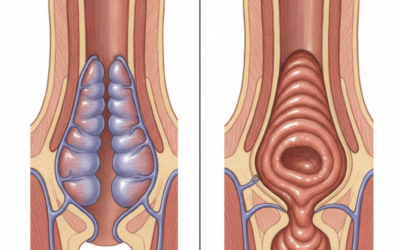
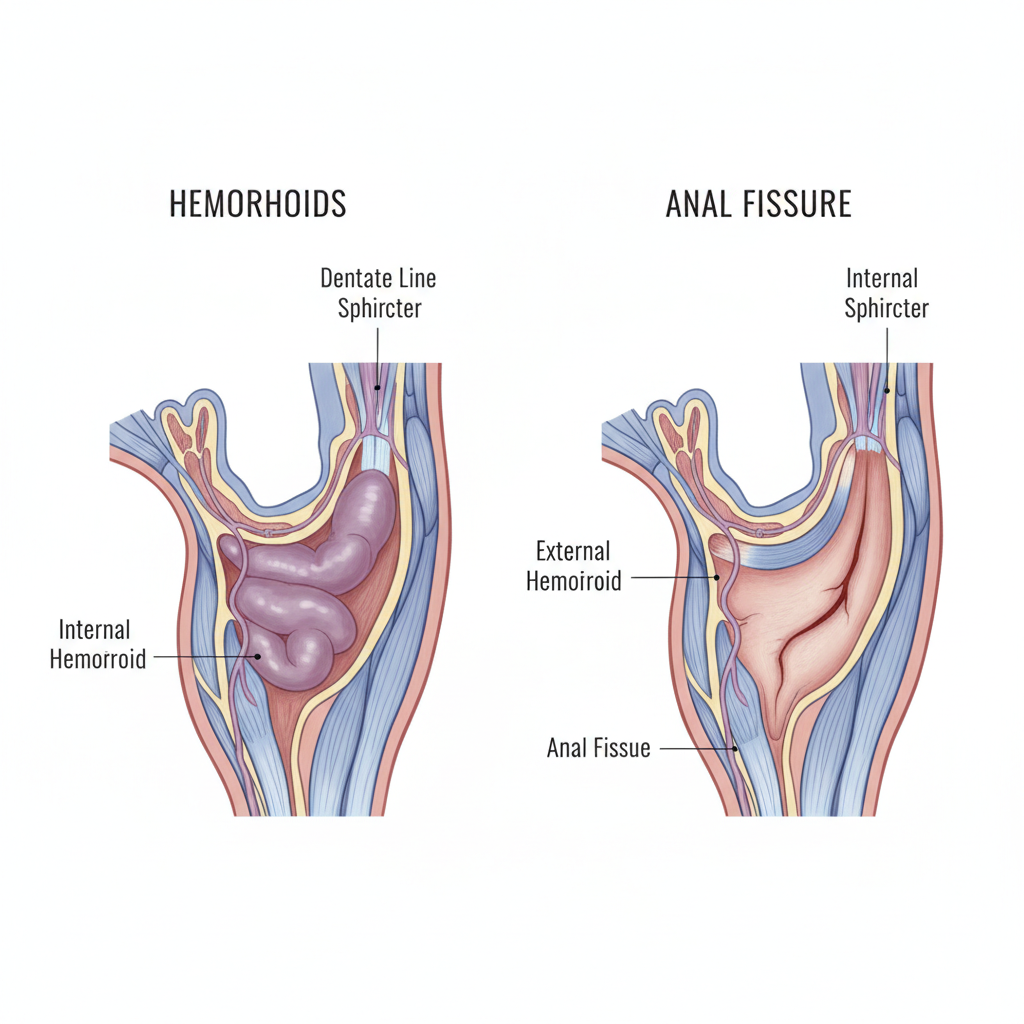
Hemorrhoids are swollen veins in the lower rectum or around the anus. Everyone has hemorrhoidal tissue that helps with normal bowel function, but when increased pressure causes these veins to enlarge, they can become symptomatic.
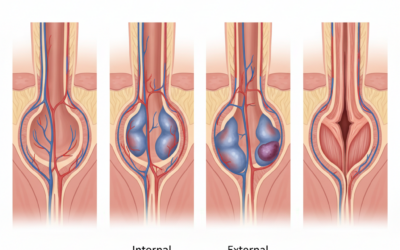
Hemorrhoids are generally divided into two categories:
- Internal hemorrhoids, which develop inside the rectum
- External hemorrhoids, which develop beneath the skin around the anus
Depending on their size and location, hemorrhoids may cause bleeding, itching, swelling, or discomfort.
What Is an Anal Fissure?
An anal fissure is a small tear in the lining of the anus. Unlike hemorrhoids, which involve enlarged veins, a fissure is an injury to the tissue itself.
Anal fissures often develop when the anal canal is stretched during a bowel movement, particularly when passing hard or large stools. They may also occur after repeated diarrhea or other conditions that irritate the area.
Many fissures heal with conservative treatment, but some can become chronic if the tear does not fully heal.
Hemorrhoids vs. Anal Fissures: Similar Symptoms
Because both conditions affect the same general area, it’s understandable that they’re often confused.
Both hemorrhoids and anal fissures may cause:
- Bright red bleeding during or after a bowel movement
- Discomfort during bowel movements
- Irritation around the anus
- Tenderness in the affected area
- Symptoms that come and go
Although these similarities can make self-diagnosis difficult, there are some important differences.
Key Differences Between Hemorrhoids and Anal Fissures
Pain
One of the biggest differences is the type and timing of pain.
Hemorrhoids
- Internal hemorrhoids often cause little or no pain.
- External hemorrhoids may cause tenderness, swelling, or discomfort, particularly if irritated.
- Pain is often described as pressure or soreness rather than sharp pain.
Anal Fissures
- Fissures frequently cause sharp, intense pain during bowel movements.
- The discomfort may continue for minutes or even hours afterward.
- Many patients describe the sensation as a tearing or burning pain.
If severe pain occurs every time you have a bowel movement, an anal fissure may be more likely than internal hemorrhoids.
Bleeding
Both conditions can produce bright red blood, but the pattern may differ.
With hemorrhoids:
- Bleeding is often painless.
- Blood may appear on toilet paper or in the toilet bowl.
With anal fissures:
- Bleeding is usually accompanied by significant pain.
- The amount of blood is often small but noticeable.
Because rectal bleeding can also be caused by other medical conditions, it should always be evaluated to determine if it is persistent or recurring.
Itching and Irritation
Hemorrhoids are more likely to cause:
- Itching
- Moisture around the anus
- Mild irritation
- A sensation of fullness
Anal fissures may cause irritation as well, but pain tends to be the dominant symptom.
Swelling
External hemorrhoids may create:
- A noticeable lump
- Swelling around the anus
- Tenderness when sitting
Anal fissures generally do not cause the same type of swelling, although chronic fissures can occasionally develop a small skin tag near the tear.
What Causes Hemorrhoids?
Hemorrhoids typically develop when increased pressure affects the veins in the lower rectum.
Common contributing factors include:
- Chronic constipation
- Straining during bowel movements
- Pregnancy
- Prolonged sitting
- Heavy lifting
- Aging
- Low-fiber diets
These factors place repeated stress on the veins, allowing them to enlarge over time.
What Causes Anal Fissures?
Anal fissures are usually caused by trauma to the lining of the anus.
Common causes include:
- Passing hard stools
- Chronic constipation
- Frequent diarrhea
- Repeated straining
- Childbirth
- Muscle spasms in the anal sphincter
Unlike hemorrhoids, fissures are tissue injuries rather than enlarged blood vessels.
Can You Have Both at the Same Time?
Yes. Some patients develop both hemorrhoids and an anal fissure simultaneously.
For example, chronic constipation can lead to straining, which increases pressure on hemorrhoidal veins while also causing a tear in the anal lining.
When both conditions are present, symptoms may overlap, making a professional evaluation even more important.
How Are These Conditions Diagnosed?
A healthcare provider can often distinguish between hemorrhoids and an anal fissure through a medical history and physical examination.
Depending on your symptoms, the evaluation may include:
- A review of your medical history
- Discussion of bowel habits and symptoms
- Visual examination of the anal area
- A gentle physical examination when appropriate
If symptoms are unusual, persistent, or accompanied by significant bleeding, additional testing may be recommended to rule out other gastrointestinal conditions.
Receiving an accurate diagnosis is important because the most effective treatment depends on the underlying cause of your symptoms.
Treatment Options for Hemorrhoids
Treatment depends on the severity of hemorrhoids and how much they affect daily life.
For mild cases, conservative measures may include:
- Increasing fiber intake
- Drinking more water
- Avoiding prolonged straining
- Regular physical activity
- Warm sitz baths to help ease discomfort
If symptoms continue despite these measures, additional treatment may be appropriate.
At California Hemorrhoid Institute, we specialize in Hemorrhoid Artery Embolization (HAE), a minimally invasive, image-guided procedure that reduces blood flow to the hemorrhoids by targeting the arteries that supply them. As blood flow decreases, the hemorrhoids may gradually shrink, helping relieve symptoms without the larger incisions associated with traditional hemorrhoid surgery.
Not every patient is a candidate for HAE, but it may be an effective option for individuals with persistent symptomatic hemorrhoids who are looking for a minimally invasive treatment.
Treatment for Anal Fissures
Many anal fissures heal with conservative care, especially when treated early.
Treatment may include:
- Increasing dietary fiber
- Staying well hydrated
- Stool softeners when appropriate
- Warm sitz baths
- Prescription medications that help relax the anal sphincter
For fissures that do not heal with these measures, additional medical or surgical treatment may be recommended by a colorectal specialist.
When Should You See a Specialist?
You should consider seeking medical evaluation if you experience:
- Bleeding that continues or returns frequently
- Persistent pain during bowel movements
- Symptoms that last more than a few weeks
- A lump, swelling, or increasing discomfort
- Symptoms that do not improve with home treatment
While hemorrhoids and anal fissures are both common, they are not the only possible causes of rectal bleeding or anal pain. An accurate diagnosis helps ensure you receive the most appropriate care.
Get the Answers You Need
Although hemorrhoids and anal fissures can share similar symptoms, they are different conditions with different treatment approaches. Understanding the differences is a helpful first step, but a professional evaluation is often the best way to determine the source of your symptoms.
At California Hemorrhoid Institute, we provide expert evaluation and minimally invasive treatment for hemorrhoids in a supportive, patient-focused environment. If you’ve been experiencing ongoing bleeding, discomfort, or recurring symptoms, our team can help you understand what’s causing them and discuss the treatment options that may be right for you.
Contact us today to schedule a consultation and learn more about advanced hemorrhoid care in Irvine and throughout Orange County.