Hemorrhoids are extremely common, but that does not mean you have to simply live with recurring bleeding, irritation, or discomfort. While many people associate persistent hemorrhoids with surgery, traditional hemorrhoid removal is far from the only treatment available.
Today, non-surgical hemorrhoid treatment options range from simple dietary and lifestyle changes to office-based procedures and advanced minimally invasive treatments such as Hemorrhoid Artery Embolization (HAE). The right approach depends on the type of hemorrhoids you have, the severity of your symptoms, and how well you have responded to previous treatment.
At California Hemorrhoid Institute in Irvine, CA, we specialize in HAE, an image-guided treatment that reduces blood flow to symptomatic hemorrhoids without surgically removing hemorrhoidal tissue. Understanding how HAE and other non-surgical options work can help you have a more informed conversation about your care.
Do All Hemorrhoids Need Medical Treatment?
No. Mild hemorrhoids can sometimes improve without a medical procedure.
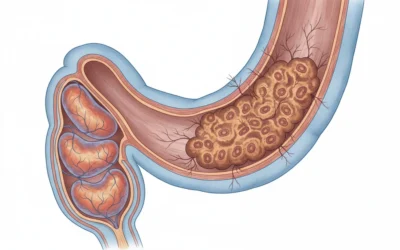
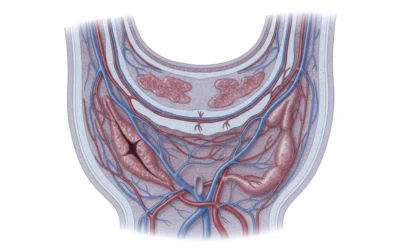
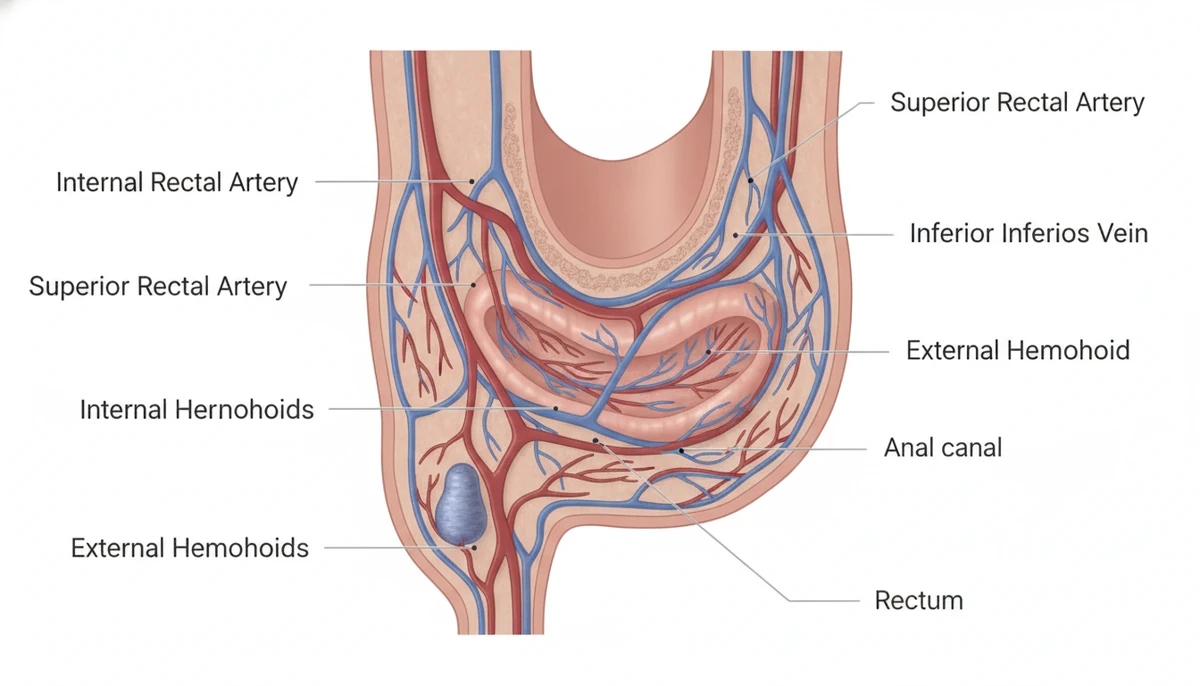
Hemorrhoids are enlarged or swollen blood vessels and supporting tissue in the lower rectum and anal area. Increased pressure in this region can contribute to their development.
Common factors include:
- Constipation
- Straining during bowel movements
- Prolonged sitting
- Pregnancy
- Aging
- A low-fiber diet
- Frequent heavy lifting
For patients with mild or occasional symptoms, addressing these contributing factors may be enough to provide relief.
However, recurring bleeding, prolapse, or symptoms that interfere with everyday life may indicate that it is time to consider additional treatment.
Dietary Changes and Fiber
One of the first recommendations for hemorrhoid symptoms is often to increase dietary fiber.
Fiber helps stools retain water and pass more easily, potentially reducing the need to strain during bowel movements. Fruits, vegetables, whole grains, beans, and other fiber-rich foods can all contribute to healthier bowel habits.
A physician may also recommend a fiber supplement when appropriate.
Increasing fiber gradually is generally preferable to making a sudden major change, which can cause temporary bloating or digestive discomfort.
Hydration and Healthy Bowel Habits
Fiber works best when combined with adequate hydration. Drinking enough fluids can help prevent hard stools and constipation.
It can also be helpful to reconsider your bathroom habits.
Try to avoid:
- Straining unnecessarily
- Ignoring the urge to have a bowel movement
- Spending extended periods sitting on the toilet
Although these changes cannot eliminate every hemorrhoid, reducing repeated pressure on the area may help prevent symptoms from worsening or returning as frequently.
Sitz Baths and Symptom Relief
A warm sitz bath involves soaking the affected area in shallow, comfortably warm water. This simple home treatment may temporarily ease irritation and discomfort associated with hemorrhoids.
Over-the-counter creams, wipes, or other topical products may also provide temporary symptom relief for some patients.
It is important to understand the limitation of these treatments. They generally focus on managing symptoms rather than treating the underlying hemorrhoidal blood flow or removing enlarged tissue.
If you repeatedly need over-the-counter products to stay comfortable, it may be worth discussing other options with a healthcare provider.
Rubber Band Ligation
When home treatment is not enough, rubber band ligation is one of the established non-surgical procedures patients may encounter.
During hemorrhoid banding, a physician places a small rubber band around the base of an internal hemorrhoid. The band restricts blood flow to the targeted tissue, causing it to shrink and eventually separate.
Banding is generally performed in an office and does not require traditional surgical incisions. It is primarily used for internal hemorrhoids and may be appropriate for certain Grade I, Grade II, and selected Grade III hemorrhoids. Some patients require multiple treatment sessions.
California Hemorrhoid Institute specializes in HAE rather than banding, but understanding the alternatives can help patients compare available approaches.
Infrared Coagulation
Infrared coagulation is another office-based treatment for certain internal hemorrhoids.
This procedure uses infrared energy to create controlled coagulation in tissue near the hemorrhoid. The resulting effect reduces blood flow and encourages scar tissue formation, which may help the hemorrhoid shrink.
Infrared coagulation is generally used for smaller internal hemorrhoids. Whether it is appropriate depends on the patient’s symptoms and hemorrhoid severity.
Sclerotherapy
Sclerotherapy treats hemorrhoids using an injected solution. The solution produces a controlled reaction within the targeted tissue, reducing blood flow and helping the hemorrhoid shrink.
Like banding and infrared coagulation, sclerotherapy is generally an office-based approach for selected internal hemorrhoids.
These procedures differ in how they work, which is one reason an accurate diagnosis and individualized treatment plan are important.
Hemorrhoid Artery Embolization
One of the more advanced minimally invasive approaches is Hemorrhoid Artery Embolization, also known as HAE. Instead of directly cutting, removing, or banding hemorrhoidal tissue, HAE addresses the arteries supplying blood to the symptomatic hemorrhoids.
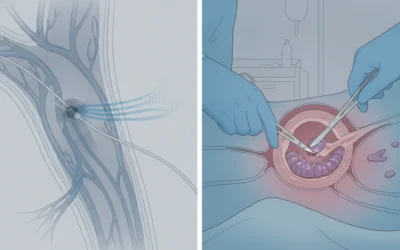
The procedure is performed by an interventional radiologist using real-time imaging guidance. A small catheter is introduced into a blood vessel through a tiny access point. The physician then carefully guides the catheter to the arteries supplying the hemorrhoidal tissue. Embolic material is delivered into selected vessels to reduce arterial blood flow.
As the excess blood supply decreases, hemorrhoids may gradually shrink, helping symptoms such as bleeding improve.
What Are the Potential Advantages of HAE?
For appropriately selected patients, HAE offers several potential benefits compared with traditional hemorrhoid surgery:
- No large surgical incisions
- No surgical removal of hemorrhoidal tissue
- Image-guided precision
- Outpatient treatment
- Preservation of surrounding tissue
- Generally less disruption to daily life than traditional surgery
- Potentially shorter recovery
HAE has been studied primarily for symptomatic internal hemorrhoids, particularly hemorrhoidal bleeding. It is not necessarily appropriate for every type of hemorrhoid, especially when a significant external component or advanced prolapse is present.
A consultation is necessary to determine whether embolization makes sense for an individual patient’s condition.
Is HAE Really Non-Surgical?
Yes, HAE is a non-surgical treatment, but it is more precisely described as minimally invasive rather than completely non-invasive.
No large surgical incision is required, and hemorrhoids are not surgically cut away. However, HAE does require a tiny vascular access point so the catheter can be introduced into the bloodstream.
This distinction matters because terms such as “non-invasive” and “non-surgical” are sometimes used interchangeably online even though they do not mean exactly the same thing.
Diet and lifestyle changes are non-invasive. HAE, banding, sclerotherapy, and infrared coagulation are minimally invasive or office-based procedures that avoid traditional hemorrhoid surgery.
When Might Surgery Still Be Necessary?
Non-surgical treatment has expanded the options available to patients, but surgery still has an important role.
A traditional hemorrhoidectomy may be recommended for patients with severe hemorrhoidal disease, substantial prolapse, large external hemorrhoids, or symptoms that have not responded appropriately to other treatments.
The goal should not necessarily be to avoid surgery regardless of circumstances. Instead, treatment should match the condition while taking effectiveness, invasiveness, recovery, and the patient’s individual needs into account.
When Should You See a Hemorrhoid Specialist?
Consider scheduling an evaluation if you experience:
- Persistent or recurring rectal bleeding
- Hemorrhoids that repeatedly return
- Prolapse during bowel movements
- Ongoing discomfort or irritation
- Symptoms that interfere with work or everyday activities
- Little improvement after dietary and lifestyle changes
Rectal bleeding should not automatically be assumed to come from hemorrhoids. Anal fissures, inflammatory conditions, polyps, and other gastrointestinal problems can produce similar symptoms. An evaluation can confirm the diagnosis and determine whether further testing is appropriate.
Explore Non-Surgical Hemorrhoid Treatment in Irvine, CA
The days when persistent hemorrhoids automatically meant choosing between living with the symptoms and undergoing traditional surgery are over. Depending on your condition, treatment may range from improved bowel habits and fiber intake to office-based procedures or advanced image-guided care.
At California Hemorrhoid Institute, we specialize in Hemorrhoid Artery Embolization for appropriately selected patients. By precisely targeting the arteries supplying symptomatic hemorrhoids, HAE offers a minimally invasive approach without surgically removing hemorrhoidal tissue.
If hemorrhoid symptoms continue despite home care, contact our Irvine office to schedule an evaluation. We can help determine what is causing your symptoms, explain your treatment options, and assess whether HAE may be an appropriate next step toward relief.