If you are dealing with recurring hemorrhoids, you may have tried creams, dietary changes, or other home remedies without getting the relief you hoped for. At that point, one question naturally comes up: What is the best hemorrhoid treatment?
There is no single treatment that is best for every patient. Hemorrhoids can vary considerably in type, severity, and symptoms. Someone experiencing occasional irritation may need a very different approach from a patient dealing with frequent bleeding or prolapsing internal hemorrhoids.
Fortunately, hemorrhoid treatment has also evolved. In addition to lifestyle changes and established treatments such as rubber band ligation, patients may now have access to minimally invasive options such as Hemorrhoid Artery Embolization (HAE).
At California Hemorrhoid Institute, we specialize in HAE and help patients understand whether this image-guided approach may be appropriate for their symptoms.
The Best Treatment Depends on Your Hemorrhoids
Before comparing treatments, it is important to understand what is causing your symptoms.
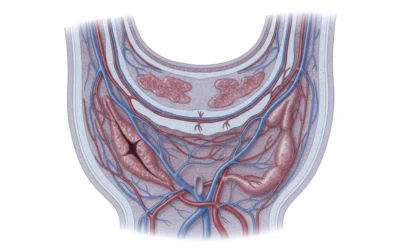
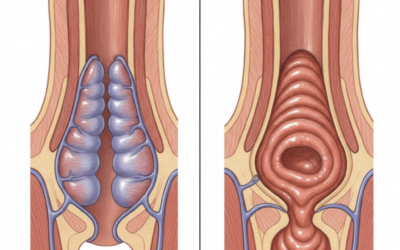
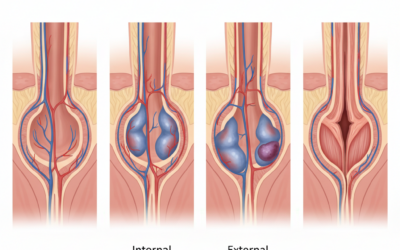
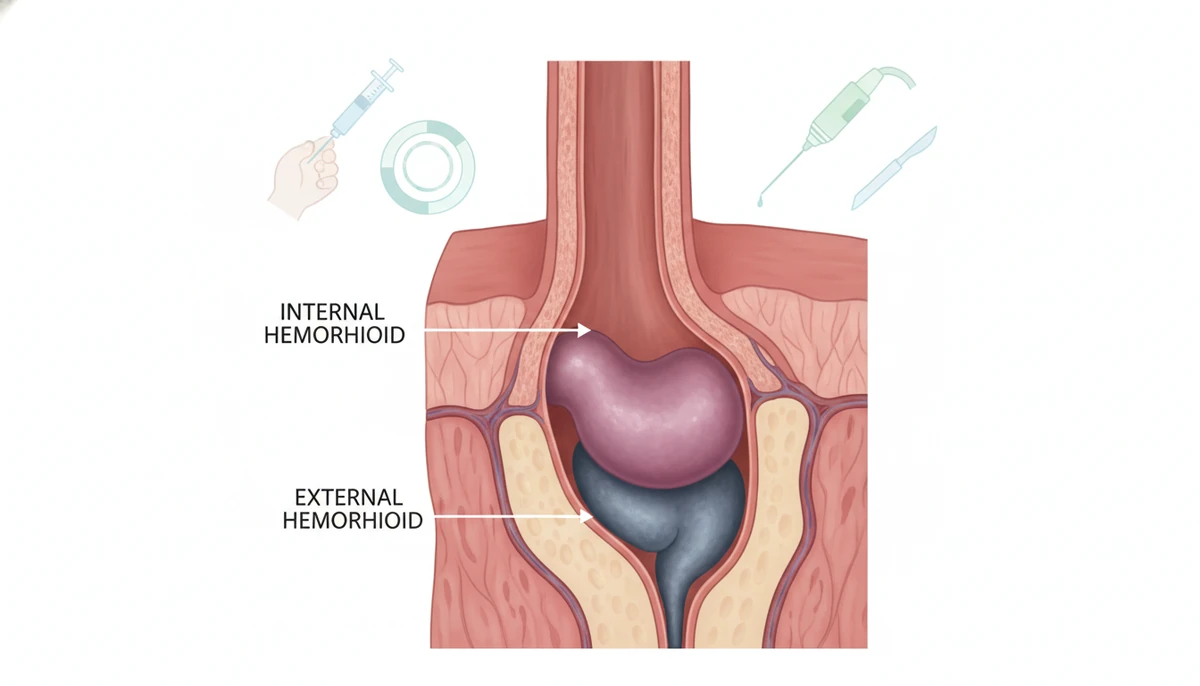
Hemorrhoids are swollen or enlarged blood vessels and supporting tissue in the lower rectum and anal area. They are generally divided into two types:
- Internal hemorrhoids develop inside the rectum.
- External hemorrhoids develop beneath the skin around the anus.
Internal hemorrhoids may also be classified from Grade I through Grade IV depending largely on the extent of prolapse.
The best hemorrhoid treatment may depend on factors such as:
- Whether hemorrhoids are internal, external, or both
- The grade of internal hemorrhoids
- Whether bleeding, prolapse, or discomfort is the primary symptom
- How frequently symptoms occur
- Previous treatments
- Your overall health
An accurate diagnosis should therefore come before choosing a procedure.
Conservative Treatment for Mild Hemorrhoids
For mild hemorrhoids, the best treatment may be the simplest one.
Lifestyle changes can help reduce constipation and straining, two common contributors to hemorrhoid symptoms. A healthcare provider may recommend:
- Eating more fiber
- Drinking enough water
- Staying physically active
- Avoiding prolonged straining
- Spending less time sitting on the toilet
- Using stool-softening strategies when appropriate
Warm sitz baths and certain over-the-counter products may also provide temporary relief from itching or irritation.
These measures can be particularly useful for occasional symptoms. However, they do not necessarily address more persistent or advanced hemorrhoids. If symptoms repeatedly return despite conservative care, it may be appropriate to discuss procedural treatment.
Rubber Band Ligation
Rubber band ligation, or hemorrhoid banding, is an established office-based treatment for certain internal hemorrhoids.
A small rubber band is placed around the base of the hemorrhoidal tissue, restricting its blood supply. The treated tissue then shrinks and eventually separates.
Banding has several potential advantages. It does not require a large surgical incision, is generally performed in an office setting, and can be effective for appropriately selected internal hemorrhoids.
However, it is not appropriate for every type of hemorrhoid, and some patients may require more than one treatment session.
Hemorrhoid Artery Embolization
For patients interested in an advanced minimally invasive option, Hemorrhoid Artery Embolization (HAE) offers a different approach.
HAE does not remove hemorrhoidal tissue. Instead, an interventional radiologist uses imaging technology to identify and treat the arteries supplying blood to the symptomatic hemorrhoids.
A small catheter is introduced into a blood vessel through a tiny access point. The physician carefully navigates the catheter to the arteries supplying the hemorrhoidal tissue and delivers embolic material to reduce blood flow.
With less arterial blood reaching the hemorrhoids, they may gradually shrink, and symptoms such as bleeding may improve.
Why Consider HAE?
For appropriately selected patients, potential advantages of HAE may include:
- No large surgical incisions
- Precise, image-guided treatment
- Outpatient care
- No direct cutting or removal of hemorrhoidal tissue
- Preservation of surrounding tissue
- A generally shorter recovery than traditional surgery
HAE is particularly relevant to symptomatic internal hemorrhoids, and patient selection matters. It is not designed to replace every other hemorrhoid procedure or treat every cause of anal discomfort.
At California Hemorrhoid Institute, we evaluate patients carefully to determine whether their symptoms and anatomy make embolization an appropriate option.
What About Hemorrhoid Surgery?
Traditional surgery continues to play an important role in hemorrhoid treatment.
A hemorrhoidectomy surgically removes hemorrhoidal tissue and may be recommended for patients with large, advanced, or complex hemorrhoids. For certain patients, particularly those with significant prolapse or an external component, surgery may provide an appropriate treatment option.
The tradeoff is that hemorrhoidectomy is more invasive and can involve a more substantial recovery than office-based or catheter-based treatments.
Other surgical approaches may also be available depending on the type of hemorrhoidal disease. The goal should not be to avoid surgery at all costs. Instead, patients should receive the least invasive treatment that appropriately addresses their condition.
Is There a Completely Non-Invasive Hemorrhoid Treatment?
The phrase “non-invasive hemorrhoid treatment” is frequently used online, but it can mean different things.
Dietary changes, hydration, and other home treatments are genuinely non-invasive. Procedures such as banding and HAE are better described as minimally invasive because they still involve a medical procedure.
HAE, for example, requires vascular access and catheterization, but it avoids surgical removal of hemorrhoidal tissue and large incisions.
Understanding this distinction can help patients develop realistic expectations when comparing their options.
How Do You Know When Home Treatment Is No Longer Enough?
An occasional hemorrhoid flare-up does not necessarily mean you need a procedure. However, it may be time for a medical evaluation if you have:
- Frequent or persistent rectal bleeding
- Recurring hemorrhoids
- Symptoms that do not improve with conservative measures
- Prolapse during bowel movements
- Ongoing discomfort
- Symptoms that interfere with work, exercise, or everyday activities
Persistent rectal bleeding deserves particular attention. Although hemorrhoids are a common cause, other gastrointestinal conditions can cause similar symptoms. A healthcare provider can confirm whether hemorrhoids are actually responsible before treatment begins.
How Is the Best Hemorrhoid Treatment Chosen?
Choosing treatment is less about finding the procedure with the most impressive name and more about matching the treatment to the patient.
For one person, additional fiber and improved bowel habits may be enough. Another may respond well to rubber band ligation. Someone with persistent symptomatic internal hemorrhoids may be a candidate for HAE, while more advanced hemorrhoidal disease may be better addressed surgically.
During an evaluation, your physician may consider your symptoms, hemorrhoid grade, medical history, previous treatments, and personal preferences.
You should also have an opportunity to ask questions about recovery, expected benefits, possible risks, and alternatives before making a decision.
Explore Minimally Invasive Hemorrhoid Treatment in Orange County
The best hemorrhoid treatment is ultimately the one that appropriately addresses your specific condition while balancing effectiveness, recovery, and your individual needs. Modern hemorrhoid care offers more choices than many patients realize, and persistent symptoms do not automatically mean that traditional surgery is the only next step.
At California Hemorrhoid Institute in Irvine, CA, we specialize in Hemorrhoid Artery Embolization, providing Orange County patients with access to a targeted, image-guided option for appropriately selected hemorrhoids.
If bleeding or other hemorrhoid symptoms continue despite conservative care, a consultation can help you understand what is causing your symptoms and which treatments make sense for you. Contact California Hemorrhoid Institute to learn more about HAE and your options for minimally invasive hemorrhoid treatment.