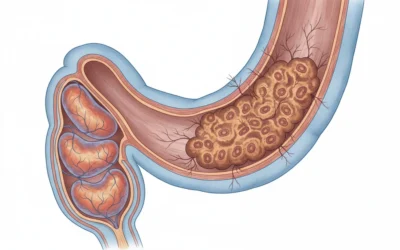
When conservative treatments are no longer providing enough relief from hemorrhoid symptoms, patients may begin exploring procedural options. Two treatments you may encounter are Hemorrhoid Artery Embolization (HAE) and traditional hemorrhoidectomy.
Both procedures are designed to address symptomatic hemorrhoids, but they work in very different ways. A hemorrhoidectomy surgically removes hemorrhoidal tissue, while hemorrhoid embolization uses an image-guided catheter to reduce blood flow through selected arteries supplying the hemorrhoids.
Understanding the differences between hemorrhoid embolization and hemorrhoidectomy can help you have a more informed conversation with your healthcare provider about which approach may be appropriate for your condition.
At California Hemorrhoid Institute in Irvine, CA, we specialize in minimally invasive Hemorrhoid Artery Embolization for appropriately selected patients throughout Orange County.
What Is Hemorrhoid Artery Embolization?
Hemorrhoid Artery Embolization is a minimally invasive, image-guided procedure performed by a physician trained in interventional radiology.
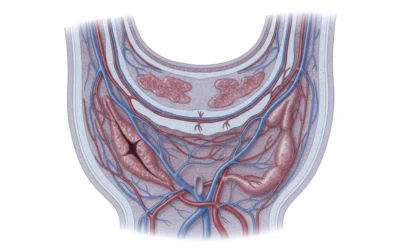
Hemorrhoids have an arterial blood supply. With HAE, the goal is to precisely reduce blood flow through selected arteries contributing to symptomatic internal hemorrhoids.
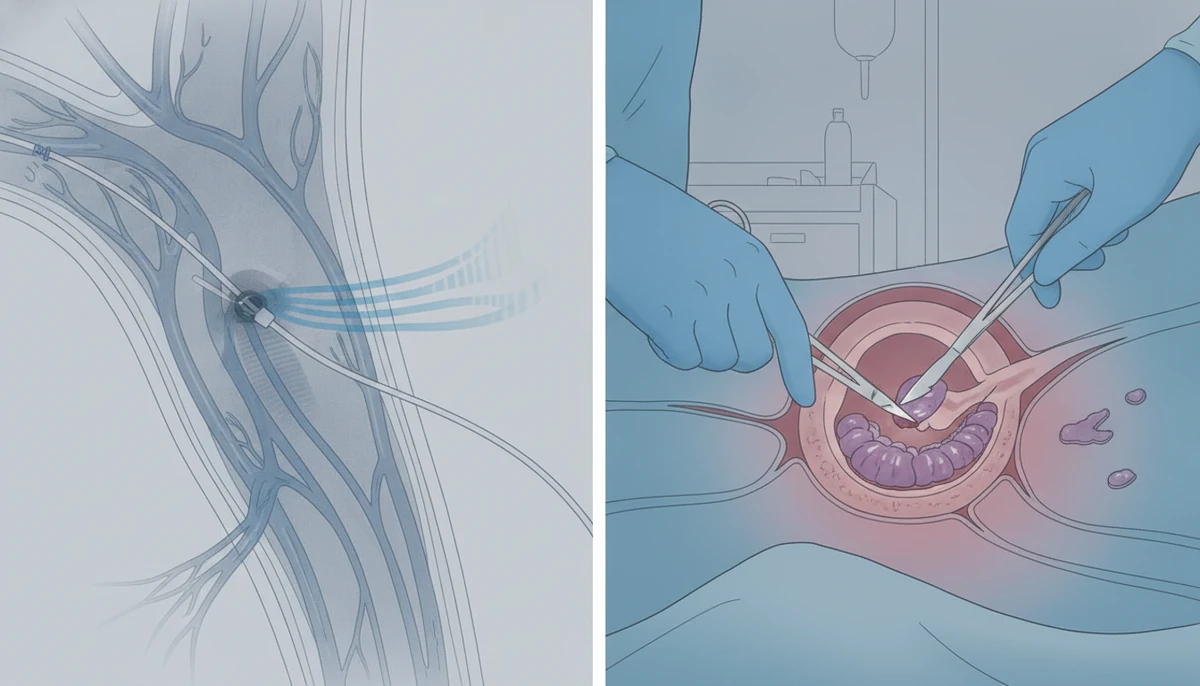
During the procedure, the physician creates a tiny vascular access point and introduces a small catheter into the bloodstream. Advanced imaging is then used to navigate through the blood vessels and identify the arteries supplying the hemorrhoidal tissue.
Once these vessels have been identified, embolic material is carefully delivered to reduce arterial blood flow. Over time, the hemorrhoidal tissue may shrink, and symptoms such as bleeding may improve.
Importantly, HAE does not require the physician to surgically cut away the hemorrhoids.
What Is a Hemorrhoidectomy?
A hemorrhoidectomy is a surgical procedure that physically removes hemorrhoidal tissue.
During the operation, a surgeon identifies the problematic hemorrhoids and removes them. Depending on the surgical technique, the resulting areas may be closed with sutures or allowed to heal naturally.
Hemorrhoidectomy has a long history in hemorrhoid care and remains an important treatment, particularly for patients with more advanced disease.
It may be considered for:
- Large hemorrhoids
- Significant prolapse
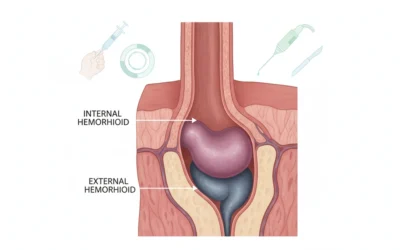
- Combined internal and external hemorrhoids
- Large symptomatic external hemorrhoids
- Hemorrhoids that have not responded adequately to less invasive treatment
Because tissue is surgically removed, hemorrhoidectomy is more invasive than embolization and typically requires a more involved recovery.
The Biggest Difference: How the Hemorrhoids Are Treated
The fundamental difference between HAE and hemorrhoidectomy is what the physician actually treats. With a hemorrhoidectomy, the hemorrhoidal tissue itself is surgically removed.
With HAE, the physician treats selected arteries supplying blood to the hemorrhoids. By decreasing arterial blood flow, the procedure is intended to help the hemorrhoidal tissue gradually shrink without directly removing it.
This distinction influences everything from the procedure itself to the recovery experience.
Comparing Invasiveness
Hemorrhoidectomy is traditional surgery. It involves working directly on the hemorrhoidal tissue in a sensitive area of the body.
HAE takes an entirely different route.
The hemorrhoids are approached from within the vascular system using a catheter and advanced imaging. There are no large surgical incisions around the hemorrhoidal tissue.
HAE is therefore described as minimally invasive rather than non-invasive. A tiny vascular access point is still required to introduce the catheter.
For patients concerned about traditional surgery, this difference may make embolization worth discussing with their physician.
Hemorrhoid Embolization vs. Hemorrhoidectomy Recovery
Recovery is often one of the biggest concerns patients have when researching hemorrhoid procedures.
Because a hemorrhoidectomy involves surgical removal of tissue, patients can experience postoperative discomfort as the treated area heals. Returning to normal activities may take time, and bowel movements during the early recovery period can be uncomfortable.
Recovery varies according to the extent of surgery, the individual patient, and the surgical technique used.
HAE generally involves a different recovery experience because there is no surgical removal of hemorrhoidal tissue. It is typically performed as an outpatient procedure, and many patients can return to routine activities sooner than they might following traditional surgery.
However, minimally invasive does not mean completely free of recovery. Patients should follow their physician’s instructions regarding activity, medications, hydration, diet, and care of the catheter access site.
What About Pain?
Pain is another important distinction when comparing the procedures. Traditional hemorrhoidectomy can cause postoperative pain because hemorrhoidal tissue has been surgically removed, and the area needs time to heal.
HAE does not involve cutting away the hemorrhoids. Because treatment occurs from inside the arteries, it generally avoids the type of surgical wound associated with hemorrhoidectomy.
Individual experiences vary, and no medical procedure can guarantee a pain-free recovery. Your physician can explain what level of discomfort may be expected with your particular treatment.
Which Treatment Is More Effective?
It is tempting to ask which procedure is simply “better,” but effectiveness depends on what needs to be treated.
Hemorrhoidectomy remains an established treatment for advanced hemorrhoidal disease and may be particularly appropriate when substantial prolapse or external hemorrhoidal tissue needs to be physically addressed.
HAE has been studied primarily as a treatment for symptomatic internal hemorrhoids, particularly when bleeding is an important symptom.
The two procedures therefore, should not always be viewed as interchangeable. A patient whose primary concern is persistent bleeding from internal hemorrhoids may have different treatment options than someone with substantial prolapse and a large external component. The best treatment is the one matched appropriately to the patient’s diagnosis.
Does HAE Preserve Hemorrhoidal Tissue?
Yes. This is another notable difference.
Hemorrhoidal cushions are part of the body’s normal anatomy and contribute to the function of the anal canal. They become a medical problem when they enlarge or begin producing symptoms.
HAE is designed to reduce arterial blood flow without surgically removing the hemorrhoidal tissue itself.
Hemorrhoidectomy, by contrast, removes problematic hemorrhoidal tissue directly.
For some patients, the tissue-preserving nature of embolization may be an appealing feature when HAE is medically appropriate.
Who May Be a Candidate for HAE?
HAE may be considered for selected patients with symptomatic internal hemorrhoids, particularly those experiencing recurrent or persistent bleeding.
A physician may consider factors such as:
- Type of hemorrhoids
- Severity and grade
- Primary symptoms
- Degree of prolapse
- Previous hemorrhoid treatments
- Overall medical history
- Individual treatment goals
Not everyone with hemorrhoids is a candidate for embolization.
For example, if a patient’s primary problem is significant external hemorrhoidal disease, embolization may not adequately address the condition. A different procedure may be more appropriate.
Who May Need a Hemorrhoidectomy?
A hemorrhoidectomy may be recommended when hemorrhoids are too advanced or anatomically unsuitable for less invasive approaches.
Patients with substantial prolapse, large external hemorrhoids, mixed internal and external disease, or persistent symptoms despite previous treatments may be referred for surgical evaluation.
While the recovery can be more involved, hemorrhoidectomy remains an important option and may offer the most appropriate treatment for certain types of advanced hemorrhoidal disease.
The goal is not to avoid surgery at all costs. It is to determine whether surgery is actually necessary for the condition being treated.
How Do I Know Which Hemorrhoid Treatment I Need?
Before choosing between hemorrhoid embolization and hemorrhoidectomy, the first step is confirming that hemorrhoids are actually causing your symptoms.
Rectal bleeding, discomfort, and changes around the anal area can have several possible causes. A healthcare provider can evaluate your symptoms and determine whether additional gastrointestinal testing is appropriate.
Once hemorrhoids have been diagnosed, treatment can be tailored to your specific condition.
Ask your physician about:
- Your hemorrhoid type and grade
- Why a particular treatment is being recommended
- Expected recovery
- Potential risks
- Likelihood of needing additional treatment
- Alternatives available for your condition
An informed decision should take both the effectiveness of the procedure and the experience of treatment and recovery into consideration.
Explore Hemorrhoid Artery Embolization in Orange County
When comparing hemorrhoid embolization vs. hemorrhoidectomy, the most important difference is that these procedures address hemorrhoids in fundamentally different ways. Hemorrhoidectomy surgically removes problematic tissue, while HAE uses precise, image-guided techniques to reduce blood flow through selected arteries supplying symptomatic hemorrhoids.
For patients with appropriate internal hemorrhoidal disease, HAE may provide a minimally invasive alternative without the large incisions or direct tissue removal associated with traditional surgery. For patients with substantial prolapse, external hemorrhoids, or more complex disease, hemorrhoidectomy may still be the more appropriate approach.
At California Hemorrhoid Institute in Irvine, CA, we specialize in Hemorrhoid Artery Embolization for appropriately selected patients. If persistent hemorrhoid symptoms are affecting your daily life, schedule a consultation to learn more about HAE and determine whether this minimally invasive treatment may be right for you.